
February 18, 2026
Content Marketing for Sport: What to Post and When

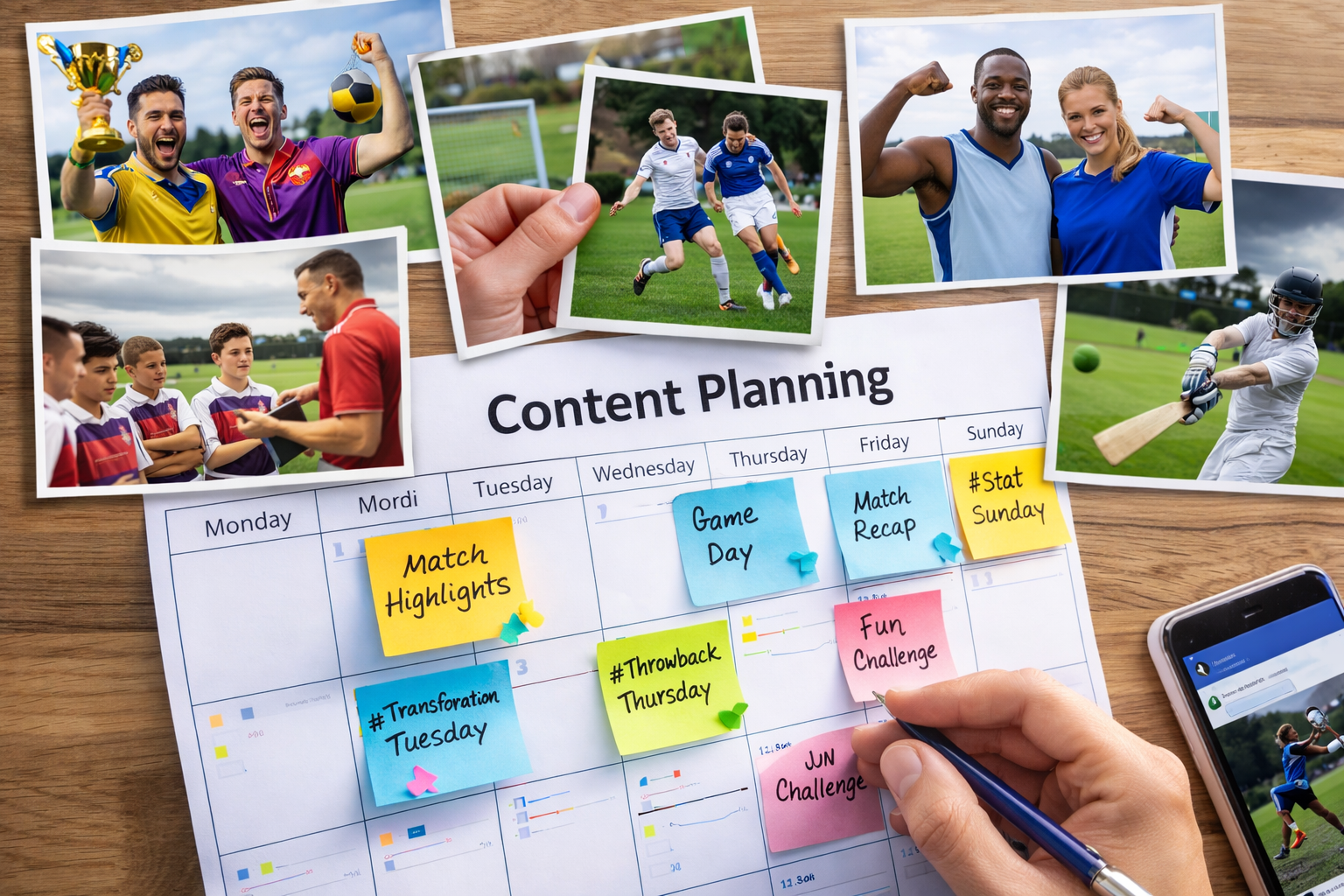
Content marketing is one of the most cost-effective ways to build your sporting organisation's digital presence. This guide breaks down what types of content work best, when to publish them, and how to build a sustainable content rhythm.
One of the questions we hear most frequently from sports clubs, associations, and events organisations is some version of the same thing: we know we should be posting more content, but we never know what to post or when. Sound familiar?
The good news is that sporting organisations are sitting on more content than almost any other type of organisation. There is inherent drama, community, personality, and story in sport at every level. The challenge is not finding the content. It is building a consistent, manageable system for capturing and sharing it. This guide will help you do exactly that.
Start with Your Content Pillars
Content pillars are the three to five recurring themes that form the backbone of your content programme. For a sporting organisation, these typically include something like: results and competition updates, community and member stories, education and tips related to the sport, behind-the-scenes and culture content, and news and announcements.
Having defined pillars means you are never starting from a blank page. Instead of asking what should we post today, you ask which pillar is it time to post from, and then find the specific piece of content within it. This shift from blank-page thinking to structured content selection is one of the most practical improvements a club or association can make to its content programme.
Match Content Types to Platforms
Not every piece of content works equally well on every platform. Understanding the natural fit between content types and channels will help you get far more from the same amount of effort.
Your website is the home for long-form content: detailed news articles, guides for new participants, event write-ups, and SEO-focused posts about your sport and location. This is the content that compounds over time, building search visibility and providing a destination for people who want to go deeper.
Email is best suited for direct, personalised communication with your existing members. Season updates, event reminders, member spotlights, and calls to action like registration reminders belong here. Email should feel like a direct conversation, not a broadcast.
Instagram and Facebook are where visual storytelling lives. Action shots from games and events, short video clips, team announcements, member recognition posts, and community moments all perform well. The emphasis is on emotional resonance over information density.
LinkedIn is appropriate for associations and sporting bodies that want to communicate with sponsors, partners, government stakeholders, and industry peers. Thought leadership content, significant announcements, and partnership news belong here rather than on consumer-facing channels.
Build a Simple Content Calendar
A content calendar does not need to be complicated. A simple spreadsheet or even a physical planner that maps out what you plan to post, on which channel, and on which date is enough to create the consistency that most organisations lack.
The key is to build the calendar around your sporting season, not just around ad-hoc inspiration. Map out your season in advance: when does registration open, when does the competition start, when are the major events, when is the finals period, when does the off-season begin. Then plan content around those milestones, ensuring you are building anticipation before key moments, capturing them as they happen, and reflecting on them afterwards.
Create Content Batches, Not Individual Posts
One of the most practical ways to reduce the ongoing effort of content creation is to batch-produce content rather than creating each piece individually as you go. Set aside two to three hours once a fortnight to write the next batch of posts, take the week's photos at training, or film a short player spotlight video. Producing content in batches is significantly more efficient than switching in and out of creative mode every day.
Scheduling tools like Buffer, Hootsuite, or the native scheduling features in Facebook and Instagram allow you to prepare and schedule posts in advance, so the content goes out at the right time without requiring daily manual effort.
Repurpose Relentlessly
Every significant piece of content you create should appear in multiple forms across multiple channels. A well-written article on your website becomes a summary email to members, a series of social media posts, and a talking point in your next e-newsletter. A video interview with a senior athlete becomes a long-form YouTube video, a series of short clips for Instagram Reels or TikTok, and a quote graphic for Facebook.
Repurposing is not laziness. It is efficiency. Your audience on each channel is largely different, and the same core content delivered in a format that suits each platform will reach far more people than a single post ever could.
The organisations with the strongest content programmes are not the ones with the most resources. They are the ones with the most consistent systems. Show up regularly, tell genuine stories, and the audience will grow.
If your organisation would like help building a content strategy and calendar that works for your team and your community, Sporting Code offers content planning services tailored to sporting bodies of every size. Get in touch via the contact form below.
Success is a journey, not a destination. Keep taking one step at a time and enjoy the journey along the way.
Onward and upward,
Team Sporting Code

Contact us today and let us help you achieve your website goals!


Leading the charge of sports Digital Solutions
Do you have a question for the team at Sporting Code? Whether it's a quick fix or a new project, we are here to help!
