
March 12, 2025
The Complete Guide to Email Marketing for Sports Associations

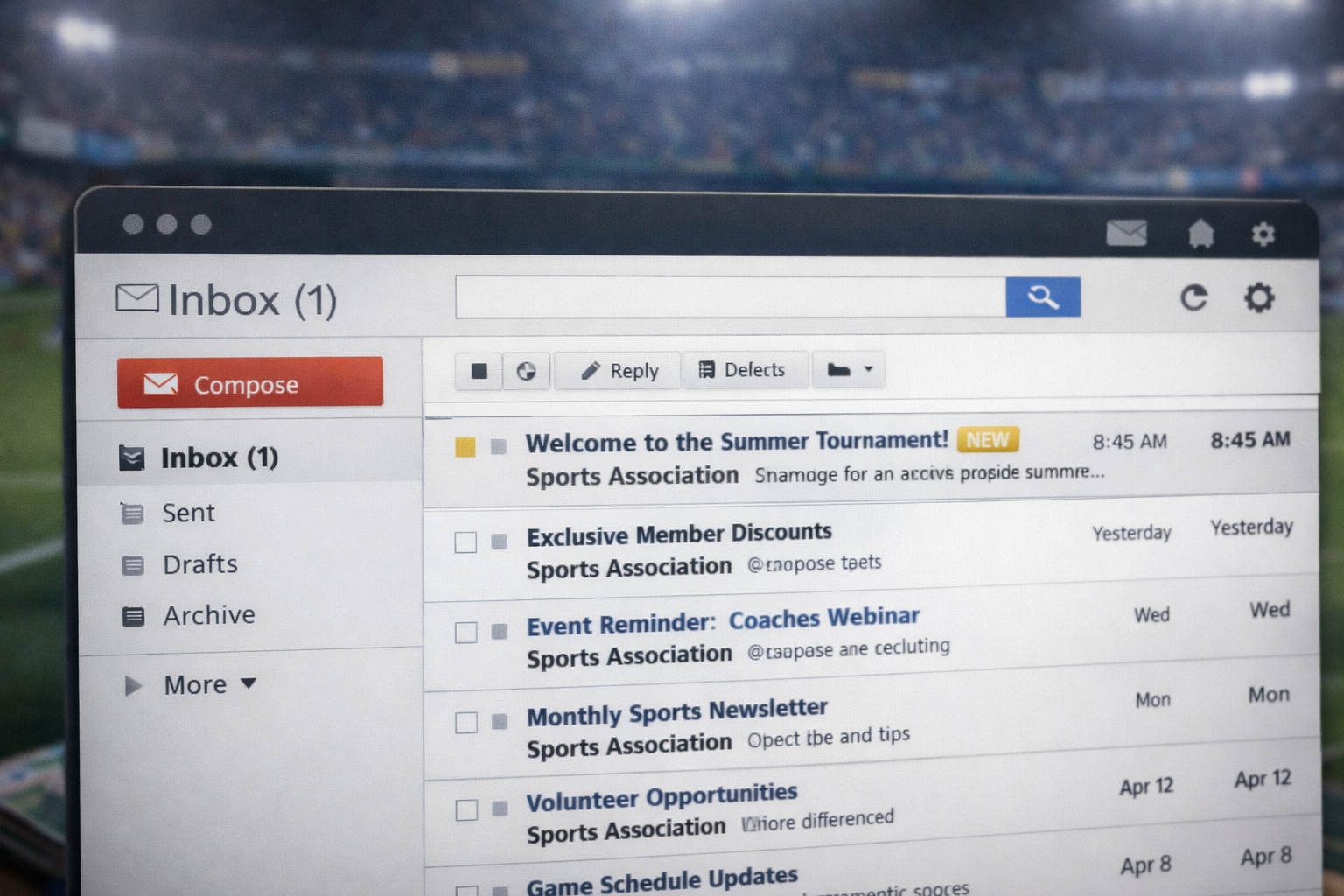
Email remains one of the highest-return digital marketing channels available to sports associations. This practical guide covers everything you need to build, grow, and optimise an email programme that actually delivers results.
Email is not glamorous. It does not generate the same excitement as a viral social media campaign or a slick new website launch. But for sports associations looking for a reliable, cost-effective way to communicate with members and drive action, email consistently outperforms every other digital channel.
The average email open rate across the sports and recreation sector in Australia sits well above that of most other industries. Members expect to hear from their associations via email. They have opted in. They want the information. The challenge is not whether email works. It is whether your association is using it well. This guide walks you through how to do exactly that.
Start with Your List
Everything in email marketing flows from the quality of your contact list. A small, engaged list will consistently outperform a large, unengaged one. Before you worry about what to send, take stock of what you have.
Most associations have member data scattered across registration systems, spreadsheets, and old email platforms. Consolidating this into a single, clean list, segmented by membership type, age group, location, or interest, is the most valuable thing you can do before sending a single campaign. Tools like Mailchimp, Campaign Monitor, or ActiveCampaign all offer straightforward list management and segmentation capabilities at accessible price points.
Define Your Email Types
Not all emails serve the same purpose, and conflating them leads to confused recipients and poor results. A well-structured email programme for a sports association typically involves four distinct types of communication.
Transactional emails are triggered by a specific action: registration confirmation, payment receipts, event booking confirmations. These should be automated, branded, and clear. They carry the highest open rates of any email type because recipients are actively expecting them.
Operational emails cover the day-to-day running of the association: season draws, venue changes, grading updates, volunteer rosters. These are functional and time-sensitive. Brevity and clarity are the priorities.
Content and engagement emails include newsletters, member spotlights, news updates, and event previews. These build community and keep members connected to the association between seasons. They should be warm in tone and visually engaging.
Campaign emails are focused on a specific outcome: driving registrations for the upcoming season, promoting a fundraising initiative, or recruiting volunteers. These should have a single, clear call to action and be sent only when there is a genuine reason to send them.
Write Subject Lines That Get Opened
The subject line is the single most important element of any email. The best content in the world is worthless if nobody opens the message. A few principles that consistently improve open rates for sports associations: keep subject lines under fifty characters so they display in full on mobile, use specific and concrete language rather than vague teasers, and create genuine urgency only when it actually exists. Recipients learn quickly when urgency is manufactured and start to ignore it.
Testing is the most reliable way to improve. Most email platforms allow you to A/B test subject lines across a portion of your list before sending to everyone. Running these tests systematically, even just a few times a year, builds a clear picture of what resonates with your specific audience.
Design for Mobile First
Over sixty per cent of emails are now opened on a mobile device. If your email templates were designed primarily for desktop viewing, you are providing a substandard experience to the majority of your recipients. Single-column layouts, large text, touch-friendly buttons, and compressed images are the foundations of mobile-friendly email design.
Most modern email platforms provide responsive templates that handle this automatically. The key is to preview every campaign on a mobile screen before sending, not just in the desktop editor.
Automate the Routine
Automation is where email marketing moves from a manual task to a genuine asset. For sports associations, the most valuable automations are usually: a welcome sequence for new members introducing them to the association and its key resources; a pre-season sequence reminding members to register as the season approaches; a lapsed member sequence reaching out to people who registered the previous season but have not yet re-registered; and a post-event sequence thanking attendees and inviting them to share feedback.
Setting these up once means they run continuously without manual effort, delivering consistent, timely communication to members at the moments when it matters most.
Measure What Actually Matters
Open rate and click rate are the two metrics most associations focus on, and both are useful. But the metric that matters most is whether your emails are driving the outcomes you care about: registrations completed, events attended, donations made, volunteers recruited. Connect your email campaigns to these outcomes by including trackable links and, where possible, setting up goal tracking in Google Analytics.
A campaign with a modest open rate that drives fifty new registrations is far more valuable than a campaign with a high open rate that drives none.
The associations with the most effective email programmes are not the ones with the most sophisticated tools. They are the ones who communicate consistently, write clearly, and always give members a good reason to open the next message.
If your association is looking to build or improve its email marketing programme, Sporting Code works with sporting bodies across Australia to develop communication strategies that drive real results. Reach out via the contact form below.
Success is a journey, not a destination. Keep taking one step at a time and enjoy the journey along the way.
Onward and upward,
Team Sporting Code

Contact us today and let us help you achieve your website goals!




Leading the charge of sports Digital Solutions
Do you have a question for the team at Sporting Code? Whether it's a quick fix or a new project, we are here to help!
